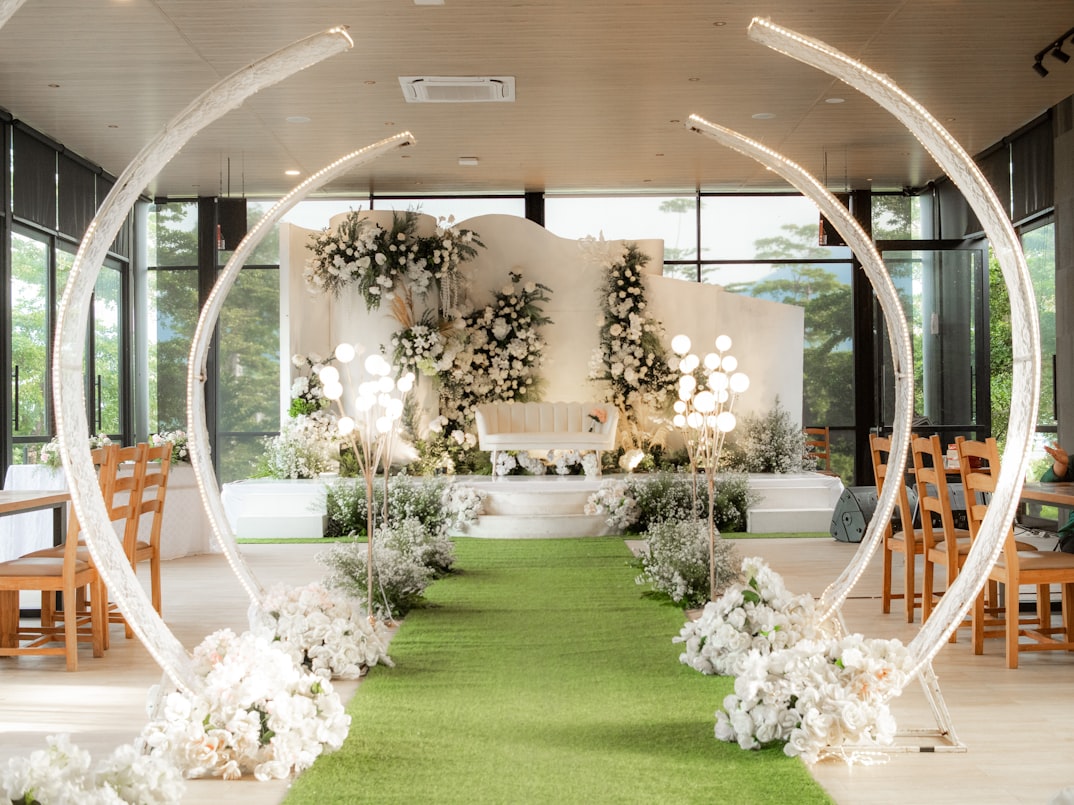


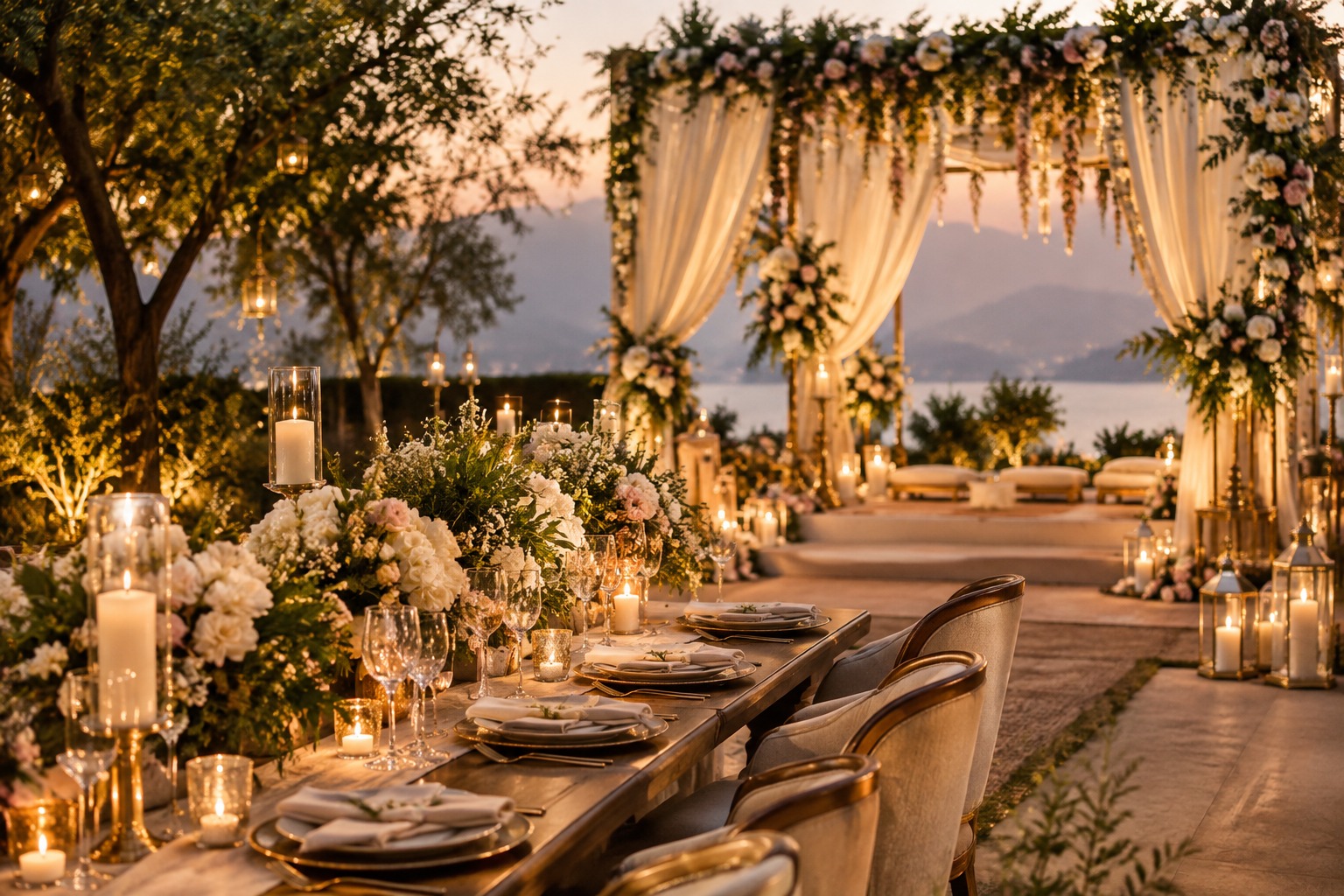
For years, Indian weddings were measured by scale — bigger guest lists, louder sangeets, taller flower walls. That's shifting. A new generation of couples is choosing quiet luxury weddings: smaller guest counts, exceptional craftsmanship, and a focus on genuine connection over spectacle. If you're researching wedding planners in Jaipur for a 2026 celebration, this shift matters, because the city's palaces, havelis, and heritage properties are perfectly suited to this understated, elevated style of celebration.
Quiet luxury isn't about spending less. It's about spending smarter — on things guests actually feel, like the texture of hand-block-printed linen, a live acoustic set instead of a DJ, or a sit-down dinner where every course is thoughtful. It's the wedding equivalent of "old money" fashion: refined, considered, and never loud for the sake of being loud.
What "Quiet Luxury" Actually Means for a Wedding
The term borrows from fashion, where it describes understated pieces made from exceptional materials rather than logo-heavy statement items. Applied to weddings, it looks like:
- Smaller guest lists — often 50 to 150 people instead of 500+
- Fewer, better details — one showstopping floral installation instead of five average ones
- Muted, tonal palettes — ivory, sage, terracotta, and dusty rose rather than saturated primary colors
- Slower pacing — events that breathe, with time for conversation instead of back-to-back performances
- Craftsmanship over branding — hand-embroidered textiles, artisanal tableware, and regional cuisine done exceptionally well
This isn't the opposite of a big fat Indian wedding — it's a recalibration of what luxury means to a generation that has grown up watching weddings turn into public performances on social media.
Why 2026 Is the Tipping Point
A few cultural and economic forces are converging right now, and they explain why intimate, high-craft weddings are becoming the default rather than the exception.
1. Guest Fatigue Is Real
Couples getting married in 2026 have spent the last decade attending back-to-back three-day weddings as guests themselves. Many have quietly decided they don't want to put 400 people through the same marathon — the travel, the wardrobe changes, the late nights — when 80 people who truly matter would make for a far warmer experience.
2. Budgets Are Being Redirected, Not Cut
Indian wedding spending has climbed year over year, but the allocation has changed. Instead of splitting a budget thin across 500 plates, couples are concentrating the same (or larger) budget on fewer guests — better food, better venues, better photography, better everything, per head.
3. Heritage Venues Reward Intimacy
Jaipur's forts, havelis, and boutique heritage hotels were built for gatherings of dozens, not thousands. A 100-guest wedding inside a restored haveli courtyard feels considered and immersive in a way a 600-guest banquet hall simply cannot replicate. This is precisely why couples exploring intimate celebrations are increasingly asking about smaller, design-forward venues rather than the largest resort available.
4. Social Media Has Flipped
Grand spectacle used to be the aspirational wedding content. Now, the most-saved wedding content on Instagram and Pinterest is soft lighting, minimal florals, and candid moments — content that photographs better when there are fewer people and less visual noise competing for attention.
Big Fat Indian Wedding vs. Quiet Luxury Wedding
| Element | Traditional Big Fat Wedding | Quiet Luxury Wedding |
|---|---|---|
| Guest count | 400–1,000+ | 50–150 |
| Venue style | Large banquet halls, big lawns | Boutique havelis, small palaces, private estates |
| Decor | Maximalist, colour-heavy, oversized installations | Minimal, tonal, texture-led |
| Entertainmen | Multiple performances, DJ, fireworks | Live acoustic music, curated playlists, quiet moments |
| Cuisine | Large buffet spreads, many counters | Curated menus, regional specialities, plated courses |
| Photography style | Wide crowd shots, staged group photos | Candid, editorial, emotion-led storytelling |
| Cost per guest | Lower | Significantly higher |
| Planning focus | Logistics at scale | Detail, craftsmanship, guest experience |
Neither approach is "better" in absolute terms — they simply serve different priorities. But the intimate model is what's gaining ground fastest among couples marrying in 2026.
Why Jaipur Is Perfectly Positioned for This Trend
Jaipur has always been associated with grandeur — the City Palace, Amer Fort, Rambagh Palace. What's changing is how that grandeur is used. Instead of renting out an entire fort for a thousand-guest spectacle, couples are booking a single restored courtyard or a boutique heritage property for a weekend of smaller, more personal events.
This is where working with an experienced Jaipur-based wedding planning team becomes essential, not optional. Quiet luxury weddings look effortless, but they require more precision than large weddings, not less:
- Sourcing venues that suit 60–150 guests without feeling empty or cavernous
- Negotiating with heritage properties that are usually built for scale
- Curating vendors — florists, chefs, musicians — who specialize in restraint rather than maximalism
- Managing a guest experience where every single detail is visible, because there's nowhere to hide a shortcut
A team like Weddings and Events by Amitesh approaches this differently from a standard event company: instead of scaling up décor and catering to fill a large space, the focus shifts to curating fewer, higher-quality elements — the right lighting, the right menu, the right pacing — so an intimate Jaipur wedding feels intentional rather than sparse.
What Couples Are Actually Prioritizing in 2026
Based on current planning trends and client conversations, here's where the budget and attention are going in intimate Indian weddings this year:
- Culinary experiences — chef-led menus, regional Rajasthani thalis reimagined, live cooking stations with fewer but better dishes
- Textiles and craftsmanship — hand-block prints, bandhani, and gota patti work used in decor rather than mass-produced fabric
- Sound and lighting design — soft, warm lighting and acoustic sets over loud sound systems
- Wellness-integrated weekends — spa mornings, quiet breakfasts, and slower schedules for guests instead of back-to-back functions
- Sustainability — smaller guest counts naturally reduce food waste, travel emissions, and single-use decor
- Personalized rituals — couples reworking traditional ceremonies to reflect their own story rather than following a fixed template
Planning an Intimate Wedding: A Practical Framework
If you're considering this route for your own celebration, here's a simple sequence to think through:
- Set the guest list first, not the budget. Quiet luxury weddings are guest-list-led. Decide who truly needs to be there before anything else.
- Choose a venue that fits the number, not the ambition. A smaller, well-chosen heritage property will outperform a grand hall booked at partial capacity.
- Pick three details to invest heavily in. Usually cuisine, décor texture, and photography/videography give the highest emotional return.
- Simplify the schedule. Fewer events, done exceptionally well, beat five rushed functions.
- Brief your planning team on restraint, not just vision. Tell them explicitly that less is the goal — otherwise defaults tend to drift toward "more."
Common Mistakes Couples Make When Going Intimate
- Treating it as a "small version" of a big wedding — quiet luxury needs its own design language, not a scaled-down big wedding
- Under-budgeting per guest — smaller weddings typically cost more per head, not less
- Choosing a venue that's too large for the guest count — empty space reads as underwhelming, not elegant
- Skipping professional planning to "save money" — with fewer guests, every detail is more visible, which raises the stakes on execution, not lowers them
Final Thought
Quiet luxury weddings aren't a rejection of Indian wedding traditions — they're a refinement of them. The rituals, the colours, the warmth of family are all still there. What's changing is the volume: fewer guests, fewer distractions, and far more attention paid to how each moment actually feels rather than how it photographs from a drone. For couples drawn to this style, Jaipur's heritage architecture and craft traditions make it one of the most natural settings in India to plan this kind of celebration, especially with a planning team experienced in scaling down thoughtfully rather than just scaling up.